Karl Wald may appear a harmless elderly gent, but he only happens to be the devilish brains behind the dreaded penalty shoot-out.
And yes, he is German.
Yet in a nation which so prides itself on penalty expertise, Karl's profile has remained about as low as a Beckham corner failing miserably to beat the first man.
It was he, then a humble Bavarian referee at a local conference in 1970, who first suggested using a shoot-out to settle drawn matches.
Bavarian officials accepted the idea, the solution soon spread across German leagues, and eventually Uefa and Fifa were persuaded.
Yet Karl’s role in footballing history – and heartbreak – has gone unnoticed.
Until now.
He has finally emerged from the shoot-out shadows after his homeland celebrated yet another spot-kick success, this time on home turf.
Karl, now 90 and a referee since 1936, is unapologetic - despite the incessant despair, and Pizza Hut adverts, he has helped inflict on the English.
He insisted: ‘I always believed I was right.
‘It’s the only way in which a result can be achieved fairly. Everything else was not really a solution.’
He may just have a point there.
The previous system, involving a tossed coin or coloured disc, left even more to chance.
A wrong call knocked Yugoslavia out of the 1968 European Championships after a semi-final stalemate against Italy.
Former Liverpool manager Bill Shankly once went typically apoplectic to discover captain Ron Yeats was denied a choice of head or tails after a Fairs Cup draw with Cologne in 1968
The referee presented a disc with Liverpool red on one side and Cologne white on the other.
Affter the spin went against his side, Shankly angrily insisted on his right to call white if he wanted – to no avail.
Of course, Liverpool went on to benefit from the spot-kick system in last year’s epic Champions League triumph over Milan.
So perhaps, rather than condemning Karl, English fans should grudgingly accept his belated moment of fame.
After all, if our cricket captains’ coin-tossing luck is anything to go by, these 40 years of footballing hurt could have been equally excruciating either way.
Of course, meine Damen und Herren, it only works if you manage to see out 120 minutes without conceding, not a mere 119...
"It is so long a chain, and yet every link rings true..."
 The Blue Carbuncle, the Engineer's Thumb, the Twisted Lip, the Yellow Face - the Red Headed League, the Reigate Squire, the Norwood Builder, the Speckled Band... these and all 51 more have all perplexed, intrigued and finally illuminated me, even as the smudge-covered, dusky-coloured hardback weighed down what should have been more dully-useful holiday luggage over the years...
... but for all my entrancement in my old-fashioned compilation of every short story, every charming pencil-black original illustration from The Strand magazine, every frustrated attempt to make progress in the impossibly-complex Spectrum 128k computer game, every visit to that famous address either in passing or in museum-exploring pilgrimage, every rippingly-antiquated shards of awkward dialogue and every seamily glamorous glimpse of London Victoriana...
... I'm ashamed to admit only just now getting around to reading my first Sherlock Holmes novel, The Hound Of The Baskervilles - and, well, enjoying the yarn - while being slightly disappointed by the actual absence of mystery. Yet even more disappointed upon reaching the end of the tale, the end of the reliable reading pleasure.
Onwards, then, to those other inexplicably-neglected long'uns: A Study In Scarlet and The Sign Of Four.
And then, to delve back again guiltlessly and gloriously, into those impeccable short forms, all 56 varieties.
Draw your chair up, and hand my me violin...

"It's not the despair. I can cope with the despair. It's the hope..."
Who said the Germans have no sense of humour?
In that fraught waiting-game between final whistle and fatal shoot-out, the speakers started blaring out “Que sera, sera, whatever will be, will be…”
Except the England fans lustily singing along surely, deep down, realised that what will be, will be yet more penalty pain.
Thankfully, the mischievous German DJs had the good grace not to follow up with Oops, I Did It Again.
For this was the most predictably depressing déjà vu – all over, all over again.
The 52,000-capacity Gelsenkirchen stadium – unofficially labelled ‘six-star’ by Sepp Blatter – had been smothered in bright English crimson rather than deep Portuguese port.
But within minutes of Ronado’s final flourish past Paul Robinson, the red swathes were breaking up into patchy seats of blue.
Some, understandably, wanted to flee the scene of the crying as soon as possible.
Others, equally so, could not bring themselves to move a muscle more than the tear ducts.
Yet some 30 minutes after the defeat, some last dregs of defiance rose from the depths to swell into a last chorus of “England! (clap-clap-clap) England! (clap-clap-clap)”.
Earlier, those same voices had been hailing that unlikely hero, “One Owen Hargreaves, there’s only one Owen Hargreaves”.
Even earlier, they had urged the ranting Luis Felipe Scolari to “sit down, shut up”, before demanding: “Who the f***ing hell are you?”
The World Cup-winning coach who holds the tournament record for consecutive wins, for a start.
The manager who embarrassed the FA by turning down England’s advances.
And the man who has now knocked England out of the last three competitions.
That’s who he is.
It was certainly a humbler, if darkly satirical, mood which was settling on England supporters as they grudgingly flew home yesterday.
One sun-braised supporter in Cologne, between mouthfuls of airport breakfast, insisted on re-enacting Wayne Rooney’s fateful stamp-and-shove routine.
Unsurprisingly, his bleary mates were reluctant to play the panto villain parts of Cristiano Ronaldo and the fertility-threatened Carvalho.
Another group steeled their stomachs for the flight by ordering a round of 5am beers.
“Klein oder gross?”, the unperturbed waiter parried.
Gross, of course.
At least absent from this airport were the fans who had inexplicably turned up to the game in shirts branded “Bin Laden 06” on the back, and Osama rubber masks on their faces.
The jubilant, jovial Germans will surely miss the (mostly) benignly rowdy England fans they have cheerily indulged.
The much-mocked team, however, will not be much-mourned.
It seemed sadly apt for England’s so-called “golden generation” to have its World Cup dreams buried in the former mining stronghold of the Ruhr.
The likes of Hargreaves, Neville and Terry – and, of course, the Coles - dug deep in adversity here.
But for too much of this campaign to convince as credible world champions, Eriksson’s England were the pits.
In that fraught waiting-game between final whistle and fatal shoot-out, the speakers started blaring out “Que sera, sera, whatever will be, will be…”
Except the England fans lustily singing along surely, deep down, realised that what will be, will be yet more penalty pain.
Thankfully, the mischievous German DJs had the good grace not to follow up with Oops, I Did It Again.
For this was the most predictably depressing déjà vu – all over, all over again.
The 52,000-capacity Gelsenkirchen stadium – unofficially labelled ‘six-star’ by Sepp Blatter – had been smothered in bright English crimson rather than deep Portuguese port.
But within minutes of Ronado’s final flourish past Paul Robinson, the red swathes were breaking up into patchy seats of blue.
Some, understandably, wanted to flee the scene of the crying as soon as possible.
Others, equally so, could not bring themselves to move a muscle more than the tear ducts.
Yet some 30 minutes after the defeat, some last dregs of defiance rose from the depths to swell into a last chorus of “England! (clap-clap-clap) England! (clap-clap-clap)”.
Earlier, those same voices had been hailing that unlikely hero, “One Owen Hargreaves, there’s only one Owen Hargreaves”.
Even earlier, they had urged the ranting Luis Felipe Scolari to “sit down, shut up”, before demanding: “Who the f***ing hell are you?”
The World Cup-winning coach who holds the tournament record for consecutive wins, for a start.
The manager who embarrassed the FA by turning down England’s advances.
And the man who has now knocked England out of the last three competitions.
That’s who he is.
It was certainly a humbler, if darkly satirical, mood which was settling on England supporters as they grudgingly flew home yesterday.
One sun-braised supporter in Cologne, between mouthfuls of airport breakfast, insisted on re-enacting Wayne Rooney’s fateful stamp-and-shove routine.
Unsurprisingly, his bleary mates were reluctant to play the panto villain parts of Cristiano Ronaldo and the fertility-threatened Carvalho.
Another group steeled their stomachs for the flight by ordering a round of 5am beers.
“Klein oder gross?”, the unperturbed waiter parried.
Gross, of course.
At least absent from this airport were the fans who had inexplicably turned up to the game in shirts branded “Bin Laden 06” on the back, and Osama rubber masks on their faces.
The jubilant, jovial Germans will surely miss the (mostly) benignly rowdy England fans they have cheerily indulged.
The much-mocked team, however, will not be much-mourned.
It seemed sadly apt for England’s so-called “golden generation” to have its World Cup dreams buried in the former mining stronghold of the Ruhr.
The likes of Hargreaves, Neville and Terry – and, of course, the Coles - dug deep in adversity here.
But for too much of this campaign to convince as credible world champions, Eriksson’s England were the pits.
"We don't need no semi-final..."
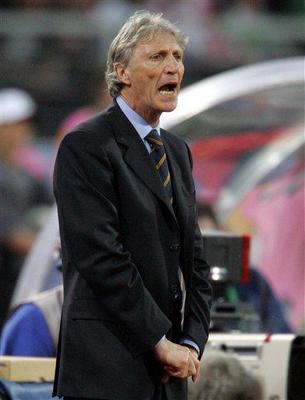
At least now Argentina are out, ex-manager Jose Pekerman can go back to his day job - feuding with Dave Gilmour over who owns Pink Floyd...
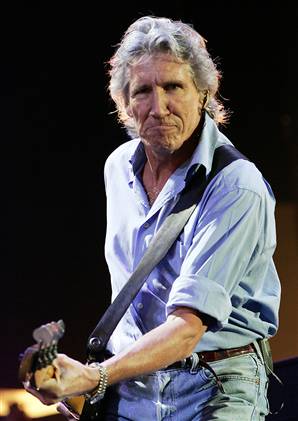
"You see, things can change - and walls can come tumbling down..."
While I’d been looking forward for ages to finally visiting Berlin – indeed, finally visiting part of the old, infamous Eastern Europe – the one thing I didn’t expect was for it to seem quite so quiet.
Especially two days from a Germany-Argentina World Cup quarter-final, but that shall be the very last mention of football. In this posting, anyway.
Every year I’ve told myself I shall finally get around to doing a bit of an Eastern European tour – starting, perhaps, from borderline Bohemia, through Hungary (Budapest, especially), Poland (Krakow, Auschwitz), Romania (er, somewhere), Estonia (Tallinn) and certainly Czech Republic (certainly Prague), in whatsoever order seems most suitable.
Except, many of these years on and the East more and more Westernised with each passing one, I still haven’t got around to it.
But now at last I’ve breached that now-invisible Iron Curtain and wandered through the Brandenburg Gate into (what was) East Berlin.
Even though passing through said Gate was a little less straightforward than you might expect nowadays, thanks to the interfering, impassable barriers and backstage area attached to some “fan fest” going on there for an obscure reason…
This was merely a minor detour, however, onto the stately Unter den Linden, lined like so much of Berlin with great bushy green trees on all sides, behind which the dusky brown buildings stand stolid and graceful – treasured by the old GDR rulers when Unter den Linden was under the East Berlin remit, despite the brutal Sixties towerblocks and graffiti-smudged warehouses and tunnels that still survive from those neglectful years.
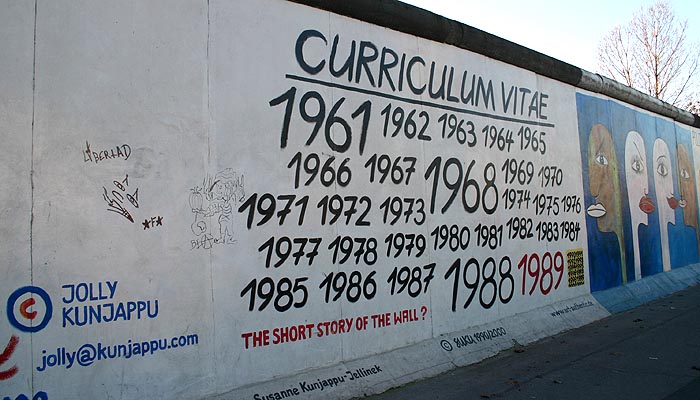
Thankfully, Unter den Linden remains what seems to be one of the few Berlin thoroughfares untouched by the omnipresent graffiti. Yet where the aerosol artists’ “work” doesn’t seem too inappropriate, however, are those few still-standing sections of the Berlin Wall – preserved nowadays as the East Side Gallery, some 1,500 metres of brickwork, now covered in officially-approved artwork from all corners of the world, but rubbed over many more times by unofficial, unapproved scrawlers.
I walked alongside the stretch in between the Ostbahnhof and the Oberbaumbrucke, surprised at first at how tall (or not) the wall seemed, but on getting closer impressed and even a little intimidated by how its size and solid immensity seemed to swell, the nearer approached. Of course, the barbed wire has long gone, and the patrol guards, and the watchtowers – how much, then, could any visitors 17 years after the fall try to appreciate what it was, how it felt to be living on either side with such an odd but powerful obstacle?
There's the tale of one of the early men employed as border guards, patrolling the wall's ramparts as one of the forces ranged against the organised escape gangs holing up in nearby houses and intricately carving out tunnels. One day, peering over onto the western side, the guard had the sudden thought: one leap, a quick burst of pace, and he'd be over and safe, free from the known restrictions of the East and free to enjoy the unknown yet imagined pleasures of the West. And so, suddenly, he did - attracting angry bawls and catcalls from the colleagues he was leaving behind, and some confused gunfire, but managing to make it far enough in flight. He must have left loved ones behind - did he think his escape would enable him to better provide, perhaps, for them? Or did he feel guilt at his own liberation at the possible expense of others'? Such adrenaline-fuelled, emotional thrashings which seem so unimaginable here and now...
And yet, for all the evils and divisions perpretated by the all-seeing Stasi, there felt something to bleakly admire in the sheer audacity and physical presence of such an obstacle, built almost out of nothing virtually overnight – surprising almost all, save one alert and suspicious Reuters correspondent in the city who cabled his newsdesk bosses that something might be about to happen, only to be ignored because it was a weekend.
When I went through a very stoooodenty arthouse film phase – well, watching whatever they might be showing each week at the Mac (Midland Arts Centre) complex in Cannon Hill Park round the corner from me in Balsall Heath, I mean, Edbaston – one of the foreign films which struck me most was called Das Versprechen (The Promise), tracing the relationship of a pair of teenage lovers whose attempt at an underground escape from East to West Berlin in the Sixties only manages to get one of them across safe and sound.
Their parallel lives apart are then traced through the 1968 rebellions, their respective marriages and parenthood and occasional written contact through the 1970s and 1980s, culminating in the drama of the wall falling and their eventual, hesitant reunion in 1989. Perhaps revisiting it would reveal elements of corniness, but the combinations of individual human dilemmas – and ageing, and changing hopes and expectations – against such a powerful historical backdrop was so memorable, especially the exhilarating ending. Just ambling alongside one longer-lingering stretch of this inanimate structure which yet became the focus of such intense emotion, brought back some of that wonder.
And then… With no set desire to visit any other obvious landmarks – the old Checkpoint Charlie is now little more than a sign, watchtower dismantled by developers secretly six years ago – I just kept walking: over the Oberbaumbrucke, across the River Spree that curiously keeps running along mere metres behind this stretch of Mauer, houses and apartments either side peeking over at each other where once they were kept apart in spirit and subject but not in sight. Along the streets now one side of the wall and the now-invisible dividing line, now the other – so many feeling so similar, yet with those brutalist Eastern blocks occasionally rising up as stark reminders on the commercially-ever-renovating landscapes. Or certain sets of traffic lights on the eastern side retaining their old-style, alternative green and red man appearances.
On Friday morning, before heading to the both impressive and jarring Olympic Stadium – classicism-aping castle ramparts of Third Reich grandeur, now topped with a plastic-looking lid – my Dad and I took the U-Bahn to the Jewish Museum, where Daniel Libeskind’s jagged creation explores the stories of Jewish famous and until-now-anonymous since medieval times but not unexpectedly, especially from the 1930s onwards – but also forces the visitor to confront a certain upheaval of the senses. Say, with a heavy clanging door opening into a triangular, lofty but drearily dark and silent chamber, with merely one sickly shard of light from one corner, the dim vision of an unreachable ladder to an unseen roof: and just whistling echoes, grim uneasiness. Is this how it felt to be herded into the unknown, yet slowly-realising darkness of death, at Auschwitz, or Dachau, or the near-here Sachsenhausen.
Well, of course not, we were merely playing, merely attempting complacently to empathise. But emerging back out into the eerie artificial light of a recognisable, real and normal museum aisle – and then onto the same old streets again outside – felt
Suddenly sport didn’t seem quite to seriously all-consuming, after all.
Then again, within a few hours, to see and hear the outbursts of joy and fellow-feeling and sheer grinning, hooting mania of the celebrating city – it seemed worthwhile to cherish that certain special value in frivolity, too.
"Hesitating to become the fated ones..."
Berlin today stages its biggest sporting event since a rather controversial little Olympics in 1936.
When Germany and Argentina take the field this evening, the 2006 World Cup will have gone a whole 66 hours with a ball kicked in anger.
Or in England´s case, languor.
And Berlin can be entitled to feel more impatient than most.
A vast Coca-Cola poster, replicated across the Berlin skyline, proclaims: ´1954 Bern, 1974 München, 1990 Rom, 2006 Hier´.
That 1974 German triumph was achieved with only three run-of-the-mill group games in then-West Berlin.
And when the 1988 European Championships came to German, pre-unification Berlin was missed out entirely.
No wonder an estimated 65,000 people took to the streets of Berlin celebrating last Saturday´s victory over Sweden in Munich.
Yet the last two days have seemed strangely subdued in the capital - the calm before the ´Sturm-und-Drang´, perhaps.
The bulbous, Eiffel-outsoaring TV Tower, so long an odd symbol of East Berlin, has been given a pink lick of paint to resemble a giant football - owned by Barbie.
Here and there you can spot a straggle of early-arriving Argentinians, even-earlier-arriving Britons or Brazilians.
Or a stray hazy Aussie, who can´t quite bring himself to follow his team home yet.
But the big screen and the ´fan fest' at the Brandeburg Gate look a little lonely, dominated by paid and voluntary staff filling in time.
Even the omnipresent mobile beer stalls haven´t all bothered to open all hours yet.
Today they will, though.
The second round - indeed, the whole tournament since the second set of first-round matches - may have been a case of ´never mind the quality, feel the quantity´.
But now the business end of the World Cup will finally hear from Berlin its Wilkommen, Bienvenue, Welcome - and hopefully live up to those premature boasts of ´best tournament ever´.
These past two days have felt like two too many.
When Germany and Argentina take the field this evening, the 2006 World Cup will have gone a whole 66 hours with a ball kicked in anger.
Or in England´s case, languor.
And Berlin can be entitled to feel more impatient than most.
A vast Coca-Cola poster, replicated across the Berlin skyline, proclaims: ´1954 Bern, 1974 München, 1990 Rom, 2006 Hier´.
That 1974 German triumph was achieved with only three run-of-the-mill group games in then-West Berlin.
And when the 1988 European Championships came to German, pre-unification Berlin was missed out entirely.
No wonder an estimated 65,000 people took to the streets of Berlin celebrating last Saturday´s victory over Sweden in Munich.
Yet the last two days have seemed strangely subdued in the capital - the calm before the ´Sturm-und-Drang´, perhaps.
The bulbous, Eiffel-outsoaring TV Tower, so long an odd symbol of East Berlin, has been given a pink lick of paint to resemble a giant football - owned by Barbie.
Here and there you can spot a straggle of early-arriving Argentinians, even-earlier-arriving Britons or Brazilians.
Or a stray hazy Aussie, who can´t quite bring himself to follow his team home yet.
But the big screen and the ´fan fest' at the Brandeburg Gate look a little lonely, dominated by paid and voluntary staff filling in time.
Even the omnipresent mobile beer stalls haven´t all bothered to open all hours yet.
Today they will, though.
The second round - indeed, the whole tournament since the second set of first-round matches - may have been a case of ´never mind the quality, feel the quantity´.
But now the business end of the World Cup will finally hear from Berlin its Wilkommen, Bienvenue, Welcome - and hopefully live up to those premature boasts of ´best tournament ever´.
These past two days have felt like two too many.
"Do you remember Walter...?"
England is not the only country to indulgently wallow in World Cup nostalgia.
Germany may have won the trophy three times to our sole success.
But for England’s 1966, read West Germany’s 1954 – and for Bobby Moore, see Fritz Walter.
Black-and-white images still surround, of the first German side to win the trophy – a surge of sporting optimism in a land still struggling with post-war reconciliation.
As elsewhere and anywhere, football provides a cherished, collective folk-history – the game remains the same, only the special dates, names and golden moments differ.
The heroes of 1954 can still be seen in public monuments, on big and small screen in archive and dramatised form – and even, this summer, in MTV pop videos.
Herbert Zimmermann’s climactic radio commentary, ‘Das Spiel ist aus!’ (‘The match is over!’) is the German equivalent of Kenneth Wolstenholme’s ‘They think it’s all over – it is now!’.
Just try mischievously suggesting German football began with Beckenbauer or Bert Trautmann – and see how swiftly you can reach the border.
For official purposes, only three of the 12 World Cup stadia have been allowed to use their real names.
Commercial sponsors such as Allianz, AOL and Kommerzbank have been censored.
But the Fritz Walter Stadion in Kaiserslautern is a protected species – much like the man himself.
Walter captained the West German side that beat favourites Hungary in the 1954 final, having lost 8-3 to the same side in an earlier round.
He died during Germany’s run to the 2002 final – and the anniversary was marked with a minute’s silence during this year’s tournament.
His memory also hovered over Germany’s match against Sweden, rivals since an ill-tempered semi-final in the 1958 World Cup that ended Walter’s career.
Now canny brewers in Kaiserslautern, where he spent his entire career, have produced their own tribute - ‘Fritz-Walter-Bier’, an eight-euro bottle-and-beerglass combination.
How fortunate for brewers Bischoff, that Kaiserslautern hosted those un-abstemious Australians not once but twice.
Walter was said to save his best for when the weather was bad – the wetter ‘das Wetter’, the better.
Becks – the sickly footballer, not the beer – and his sun-stricken England colleagues would welcome a forecast of ‘Fritz-Walter-Wetter’ this weekend.
Germany may have won the trophy three times to our sole success.
But for England’s 1966, read West Germany’s 1954 – and for Bobby Moore, see Fritz Walter.
Black-and-white images still surround, of the first German side to win the trophy – a surge of sporting optimism in a land still struggling with post-war reconciliation.
As elsewhere and anywhere, football provides a cherished, collective folk-history – the game remains the same, only the special dates, names and golden moments differ.
The heroes of 1954 can still be seen in public monuments, on big and small screen in archive and dramatised form – and even, this summer, in MTV pop videos.
Herbert Zimmermann’s climactic radio commentary, ‘Das Spiel ist aus!’ (‘The match is over!’) is the German equivalent of Kenneth Wolstenholme’s ‘They think it’s all over – it is now!’.
Just try mischievously suggesting German football began with Beckenbauer or Bert Trautmann – and see how swiftly you can reach the border.
For official purposes, only three of the 12 World Cup stadia have been allowed to use their real names.
Commercial sponsors such as Allianz, AOL and Kommerzbank have been censored.
But the Fritz Walter Stadion in Kaiserslautern is a protected species – much like the man himself.
Walter captained the West German side that beat favourites Hungary in the 1954 final, having lost 8-3 to the same side in an earlier round.
He died during Germany’s run to the 2002 final – and the anniversary was marked with a minute’s silence during this year’s tournament.
His memory also hovered over Germany’s match against Sweden, rivals since an ill-tempered semi-final in the 1958 World Cup that ended Walter’s career.
Now canny brewers in Kaiserslautern, where he spent his entire career, have produced their own tribute - ‘Fritz-Walter-Bier’, an eight-euro bottle-and-beerglass combination.
How fortunate for brewers Bischoff, that Kaiserslautern hosted those un-abstemious Australians not once but twice.
Walter was said to save his best for when the weather was bad – the wetter ‘das Wetter’, the better.
Becks – the sickly footballer, not the beer – and his sun-stricken England colleagues would welcome a forecast of ‘Fritz-Walter-Wetter’ this weekend.
Subscribe to:
Posts (Atom)